

Spring Fundraising Mini Series S.1 'What We Wish Funders Knew: Understanding Impact Beyond the Criteria'
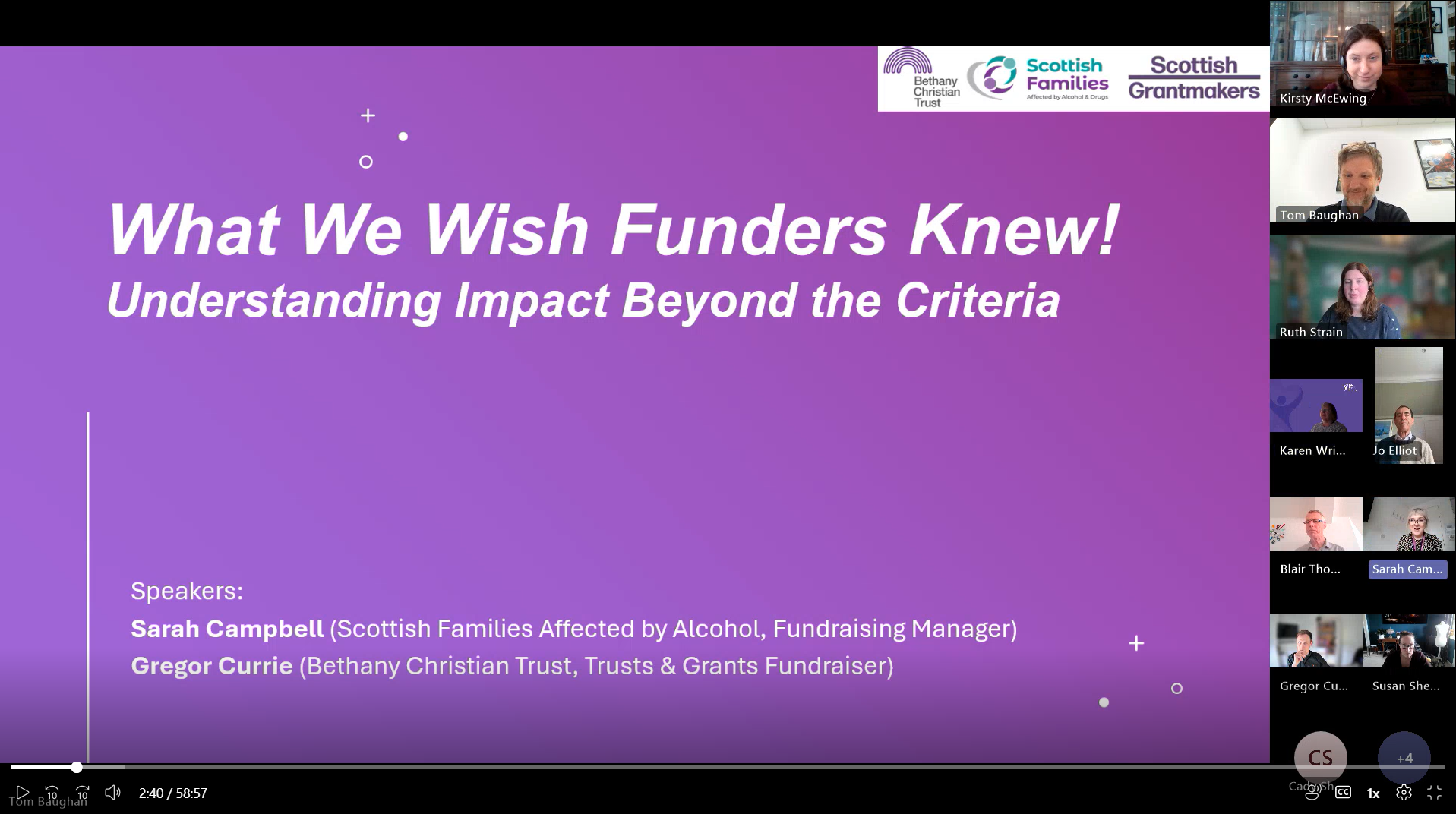
Our recent Scottish Grantmaker's session explored what charities experience behind the scenes when navigating today’s funding landscape: what funders see, what they miss, and what could meaningfully improve the process for both sides. Here are the key points for anyone who couldn’t attend.
1. The Reality of Modern Charity Funding
Charities face increasing pressure to meet strict criteria while coping with shrinking resources.
Some of the data discussed:
Individual donations dropped by 30% between 2018–2023.
£1 million now has the spending power of just 28.2% of its 2020 value.
Some funders see application success rates as low as 2%.
The result: a sector trying to do more with less, often at the expense of staff time, stability, and long‑term planning.
2. What Impact Really Looks Like
Real community impact doesn’t always come from large or flashy projects.
Examples shared:
£1,000 kept a national helpline running for a month.
£640 (bundled from three small grants) funded a book club that became essential support for families.
These stories highlight why small, flexible funding matters. Gregor shared the mantra of
“Don’t be too proud to be a toilet‑roll funder. Electricity, rent, and legacy projects can make the biggest difference."
3. Pilots, Proven Work, and the Problem of Short-Termism
Funders often prioritise new pilot projects, but pilots without long-term pathways can be harmful.
Once people rely on a service, losing it can be destabilising. Sustainable, multi‑year funding creates deeper, more reliable community impact than repeated short-term projects.
5. Human‑Led Grantmaking
Shona shared the value of involving community members directly in funder decision‑making panels. This approach:
Brings lived experience into the room
Ensures funding decisions genuinely reflect community need
6. What Fundraisers Wish Funders Would Do
A practical Wishlist from Sarah and Gregor emerged:
Improve Processes
Introduce a 2‑stage (or 3‑stage with Expression of Interest) application process to reduce wasted effort and allow detail only at later stages.
Provide specific feedback on weaknesses, even brief, to support learning and more targeted future applications.
Keep eligibility criteria up to date, including clear explanations for income caps and how they’re set.
Review funding caps more frequently in line with inflation.
Maintain an up‑to‑date, relevant FAQ that answers common questions without charities needing to research or chase clarification.
Shift the Focus of Applications
Recognise that financial detail is only one part of the application and often doesn’t capture the full picture.
Give space on application forms for nuance as charities need room to explain their financial situation beyond headline figures.
Allow space to outline project‑specific context, not just general organisational data.
Strengthen Relationships
Ask both successful and unsuccessful applicants how the process felt and what could be improved.
Build real relationships with funded organisations: visit projects, understand their work, and trust the people closest to the issues.
Take a long-term view, considering how long a project needs to run to deliver meaningful, stable impact rather than focusing on short-term novelty.
These changes can significantly improve transparency, efficiency, and trust.
Final Note
Impact often lives in the everyday, essential, unshowy work that keeps people supported and services running. Funders and charities ultimately want the same thing: stable and strong community-led impact. Slight shifts in approach could help unlock far more of it.
Thanks again to Sarah Campbell and Gregor Currie for sharing their insights and to all attendees who added valuable thoughts during our discussion.
Relevant Contact Details:
Scottish Grantmakers - scottishgrantmakers@wssociety.co.uk
Sarah Campbell - sarah@sfad.org.uk(Scottish Families Affected by Alcohol, Fundraising Manager)
Gregor Currie - gregorcurrie@bethanychristiantrust.com(Bethany Christian Trust, Trusts & Grants Fundraiser)